



Table of Contents
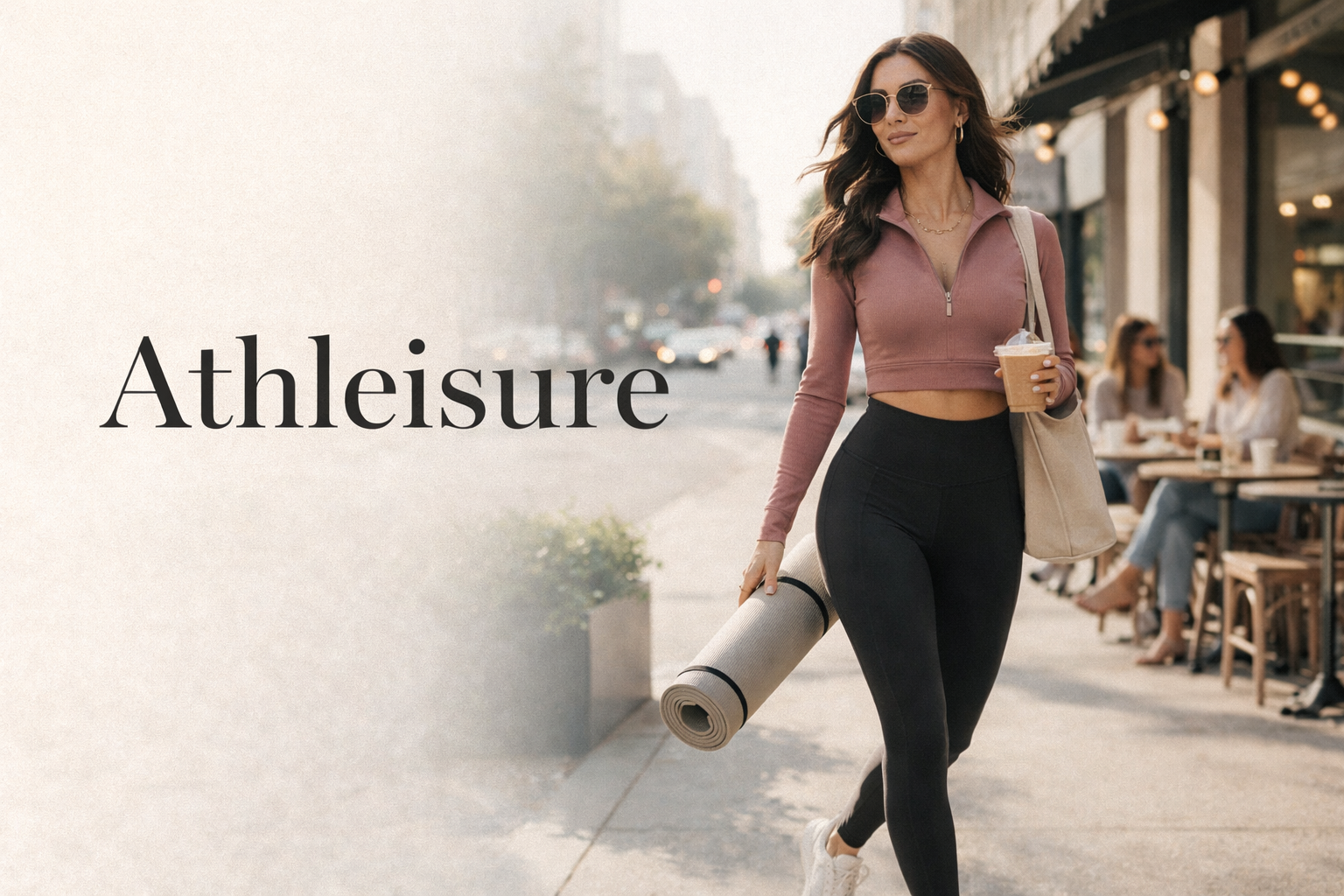
Last weekend, I watched a friend rush from a Saturday morning yoga class straight to brunch — no outfit change, no awkward gym-bag shuffle. She looked completely put together in a pair of high-waisted leggings and a cropped quarter-zip. Nobody at the table batted an eye. That moment stuck with me, because it perfectly captured something that has been quietly reshaping how women get dressed: athleisure is no longer a trend. It is how we live now.
From Gym Floors to City Streets — How We Got Here
If you rewind ten years, wearing workout clothes outside a gym still raised eyebrows. “Are you coming from the gym or going to the gym?” was a question people actually asked. Fast forward to today, and the global athleisure market is projected to cross $660 billion by 2030, according to Allied Market Research. That is not a fad — that is a permanent shift in consumer behavior.
What drove the change? Honestly, it was not some genius marketing campaign. Women simply got tired of choosing between looking good and feeling comfortable. The old rules — structured blazers for meetings, stiff denim for weekends, delicate fabrics for evenings — stopped making sense when daily life started demanding more flexibility. Work-from-home culture accelerated it, but the desire was already there.
Here is the part most fashion articles skip: athleisure succeeded because the fabrics finally caught up with the ambition. Modern performance textiles — moisture-wicking blends, four-way stretch knits, antimicrobial finishes — made it possible to create pieces that genuinely perform during a workout and still look polished at a coffee shop afterward. Without that technical leap, athleisure would have remained a lazy-Sunday stereotype.
The Pieces That Actually Earn Their Spot in Your Wardrobe
Not every activewear piece deserves closet real estate. I have made plenty of impulse buys — the neon sports bra that looked amazing online but clashed with everything I own, the joggers that pilled after three washes. Mistakes teach you what to prioritize.
High-waisted leggings with real compression. This is the foundation. Skip anything that feels paper-thin or rolls down the moment you bend over. Good compression leggings smooth your silhouette, support you through a HIIT class, and pair effortlessly with an oversized knit or a tucked-in tee. Look for a brand that uses squat-proof fabric with a comfortable waistband — it makes all the difference between “I wore these once” and “I own four pairs.”
A versatile quarter-zip or lightweight jacket. This is the layering piece that bridges the gap between sporty and street-ready. Throw it over a sports bra for a run, or layer it with gold hoops and ankle boots for an evening out. Brands like Berunwear have been doing interesting work in this space — their custom activewear line focuses on performance fabrics that do not sacrifice aesthetics, which is exactly what you want from a transitional piece.
Matching sets. A coordinated top-and-bottom set is the easiest way to look intentional with zero effort. Wear them together for a clean, monochromatic look, or break them apart and mix with denim or tailored trousers. The trick is choosing neutral or muted tones — olive, charcoal, dusty rose — that integrate into your existing wardrobe instead of screaming “I just left spin class.”
Common Mistakes That Make Athleisure Look Sloppy (and How to Avoid Them)
There is a fine line between effortlessly casual and “I gave up.” Most styling missteps come down to three things:
Ignoring fit. Oversized hoodies are great. Oversized everything is not. Athleisure works best when at least one element is fitted. Baggy joggers? Pair with a fitted tank. Loose sweatshirt? Balance it with sculpted leggings. The contrast creates shape and keeps the outfit from looking like pajamas.
Forgetting accessories. This is the single fastest upgrade. A structured handbag, a pair of clean white sneakers (not your actual running shoes), a simple chain necklace — these details signal that you made a deliberate choice. I have seen the exact same leggings-and-tee combo look completely different depending on whether the person added sunglasses and a crossbody bag or just walked out with a water bottle.
Buying cheap fabrics that look cheap. Budget activewear has improved dramatically, but there is still a threshold below which the fabric becomes see-through, pills instantly, or loses its stretch after a few washes. Investing in quality pieces custom sportswear manufacturers pays off — both in how the clothes look on day one and how they hold up on day two hundred.
Styling Athleisure for Real Life — Not Just Instagram
Social media makes athleisure styling look effortless, but most of those outfits are shot in perfect lighting with no commute, no toddler, and no laptop bag. Here is how real women are making it work in situations that actually matter:
For a casual workday (creative or remote offices): Black leggings, a relaxed blazer, pointed-toe mules, and a structured tote. The leggings do the comfort work. The blazer does the credibility work. Nobody questions it.
For school drop-off to errands: A matching set in a solid neutral, clean sneakers, and a baseball cap. Add a denim jacket if the weather calls for it. You look pulled together without spending twenty minutes deciding what to wear at 6:45 a.m.
For travel: This is where athleisure truly earns its keep. Compression leggings prevent leg swelling on long flights. A moisture-wicking top keeps you fresh during layovers. Pack a lightweight jacket that folds small, and you have covered three climate zones with two pieces.
For a weekend dinner: Swap the sneakers for heeled boots. Swap the sports bra for a bodysuit underneath your jacket. Keep the joggers — the tapered, ankle-length kind — and add statement earrings. Done. You crossed the casual-to-evening line without changing your entire outfit.
What to Look for Before You Buy
After years of trial and error, I have a short mental checklist that saves me from regrettable purchases:
Fabric weight. Hold it up to the light. If you can read a headline through the fabric, keep walking. Good athleisure fabric has substance without being heavy.
Seam quality. Flatlock seams lay smooth against the skin and do not chafe during movement. Raised seams are a red flag — they indicate the piece was designed for looks, not function.
Waistband construction. A wide, double-layered waistband stays put. A thin elastic band will roll, dig, and annoy you within twenty minutes.
Versatility test. Before buying, mentally pair the piece with three things you already own. If you cannot, it does not belong in your cart — no matter how good the sale price is.
The Bottom Line — Make Your Wardrobe Work Harder
Athleisure is not about dressing down. It is about dressing smart. The women who get the most out of their wardrobes are the ones who stop treating “workout clothes” and “real clothes” as separate categories. When you invest in well-made activewear that fits properly and looks intentional, every piece pulls double or triple duty — gym, office, weekend, travel.
Start with three foundational pieces: one pair of quality leggings, one versatile layer, and one matching set in a neutral tone. Build from there. Pay attention to fabric, fit, and finishing details. Skip the gimmicks and the fast-fashion knockoffs.
Your closet should work as hard as you do. And right now, the smartest way to make that happen is to stop drawing a line between athletic and fashionable — because the best pieces are already both.