



Table of Contents
If you are building a beauty brand and considering custom cosmetic bags, companies like Ciffnoo, a lifestyle bag manufacturer with long experience in OEM and private label production, often support brands through this process. Adding cosmetic bags is not just about offering an accessory. It can increase perceived value, improve packaging presentation, and strengthen your retail positioning.
Turning a design idea into a retail-ready cosmetic bag involves more than choosing fabric and printing a logo. Understanding how manufacturing works will help you make better decisions and avoid costly revisions later.
1. Start with the Right Manufacturing Setup
Where your cosmetic bags are produced affects quality, speed, and scalability. Factories located near strong material supply chains can source fabrics, zippers, hardware, and packaging faster, which reduces delays during sampling and bulk production.
When evaluating a manufacturer, focus on three key areas.
First, production capacity. If your cosmetic bag performs well in the market, your supplier should be able to scale with you. A factory capable of producing high monthly volumes prevents disruptions when demand increases.
Second, sampling speed. Professional manufacturers typically complete samples within 7 to 10 days. Fast sampling allows you to test design details, review construction quality, and move into production without losing momentum.
Third, quality systems. Certifications such as ISO 9001 indicate that the factory operates under a structured Quality Management System. This reduces defect rates and ensures that repeat orders maintain consistent standards.
Selecting the right manufacturing partner early gives your brand a stable foundation for growth.
2. Choose Materials That Fit Your Brand Positioning
Material selection plays a major role in both function and brand perception.
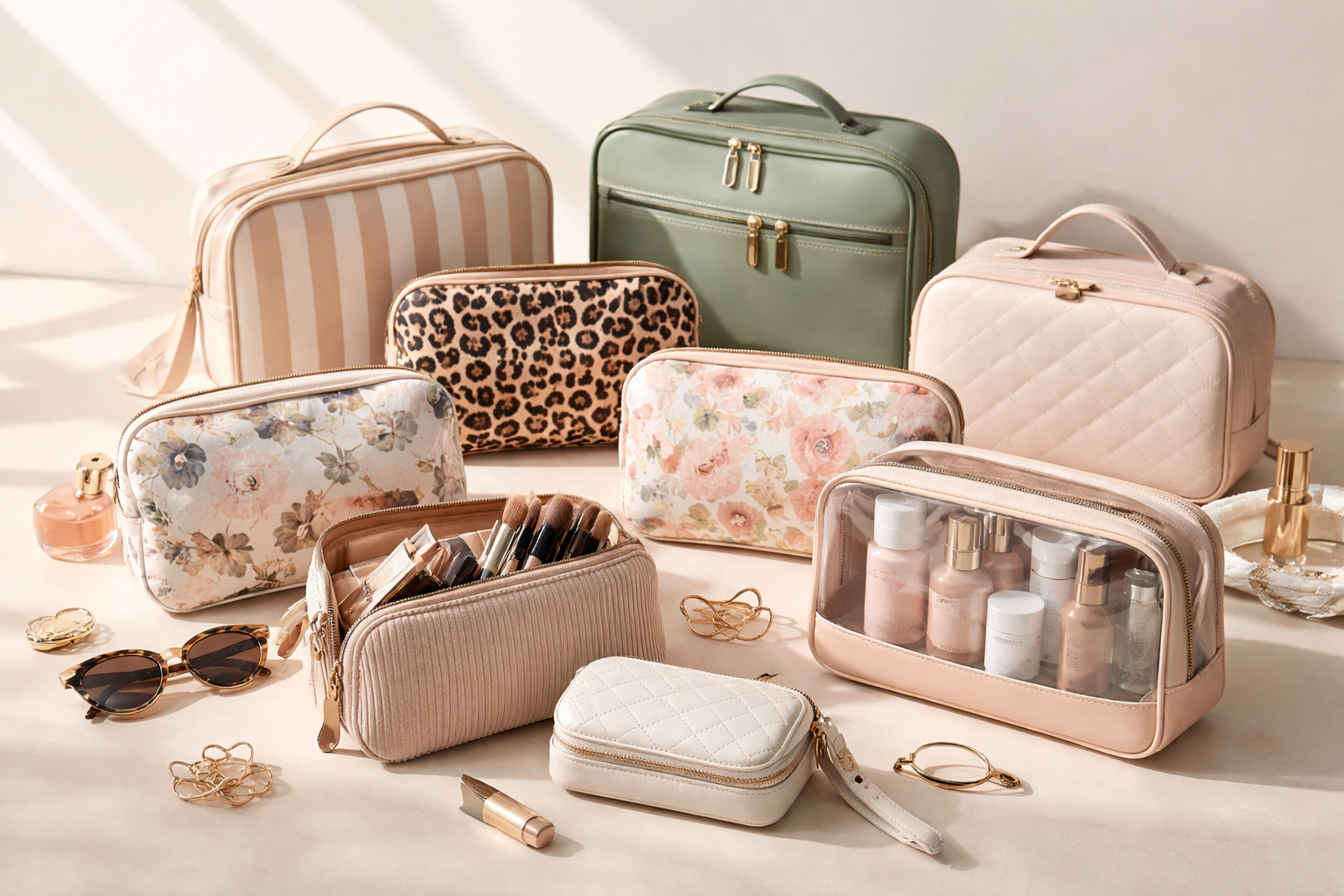
Waterproof nylon is practical, lightweight, and easy to clean. It works well for travel cosmetic bags and everyday utility kits. Brands targeting affordable and functional segments often prefer nylon for its durability and cost balance.
Vegan leather, commonly known as PU, offers a more structured and refined appearance. It suits mid-range and premium beauty lines, especially gift sets or curated collections that require a polished look.
Neoprene provides padding and a soft, protective feel. It is useful for cosmetic bags designed to carry fragile skincare bottles or glass containers.
For brands that emphasize sustainability, RPET made from recycled plastics supports eco-conscious positioning. When sourced with proper certification, it also strengthens transparency in your supply chain story.
Beyond the outer fabric, internal support matters. Fusible interfacing helps the bag maintain shape on shelves. Padding or fleece adds structure and protects delicate products. These unseen details often determine whether the bag feels substantial or flimsy in the customer’s hands.
3. Pay Attention to Construction Details
A cosmetic bag may appear simple, but construction quality directly affects performance.
Zipper installation is one of the most critical steps. Professional factories use enclosed seam techniques so the interior looks clean and polished. Proper topstitching keeps the lining away from the zipper teeth, preventing fabric from getting caught during use.
The base of the bag is another important detail. By boxing the corners and stitching them at measured distances, the manufacturer creates depth. This allows the bag to stand independently on a counter instead of collapsing flat.
Stress points at seam intersections should be reinforced with double stitching. Cosmetic bags often hold heavy products, and weak seam construction can lead to early tearing. Reinforcement improves durability and protects your brand reputation.
Manufacturers such as Ciffnoo typically follow structured Standard Operating Procedures during these steps to maintain consistency across large production runs.
4. Align Branding Methods with Your Order Volume
Branding transforms a cosmetic bag from a simple storage item into a brand asset. The method you choose affects cost, scalability, and perceived value.
Digital printing works well for small batches and complex artwork. Setup costs are relatively low, which makes it suitable for testing new designs. However, unit costs are higher compared to large-scale methods.
Screen printing becomes more economical at higher volumes. Although setup costs are higher, the per-unit cost decreases significantly as production increases.
Embossing creates a subtle raised or pressed logo effect. It is often used on PU leather or neoprene to achieve a refined finish without additional color layers.
Metal logo plates are typically used for luxury collections. They add material cost but instantly communicate a premium feel.
Before finalizing production, requesting a digital mockup allows you to evaluate logo placement and proportion. This reduces revisions and shortens development time.
5. Plan Quality Control and Logistics Early
Quality control protects both your investment and your reputation. Reliable manufacturers conduct inspections to verify stitching tension, hardware alignment, zipper performance, and fabric accuracy.
Some factories implement full inspections to ensure each unit matches the approved sample. This level of oversight significantly reduces the risk of returns or customer complaints.
Shipping should also be planned in advance. Sea freight is more economical and suitable for planned restocking cycles. It requires longer transit times but lowers landed cost.
Air freight is faster and ideal for urgent launches or replenishment. While more expensive, it can protect your sales timeline if inventory runs low.
Coordinating production schedules with shipping methods prevents unnecessary delays.
6. Consider Minimum Order Quantities and Long-Term Growth
For emerging beauty brands, committing to very high order volumes can be risky. Many manufacturers offer lower minimum order quantities for first orders, often around 500 to 600 pieces. This allows you to test market demand without excessive inventory exposure.
As sales grow, production volume can increase. Working with an experienced supplier such as Ciffnoo can simplify scaling because systems, materials, and construction standards are already established.
When design support, sourcing, production, and logistics are handled under one coordinated system, communication becomes clearer and timelines more predictable.
Final Thoughts
Creating custom cosmetic bags for your beauty brand involves thoughtful decisions at every stage. Material selection influences positioning. Construction techniques determine durability. Branding methods shape perceived value. Quality control and logistics protect your launch timeline.
When these elements work together, your cosmetic bag becomes more than packaging. It becomes a functional extension of your brand that supports retail success and long-term growth.