



Table of Contents
jewellery turning your skin green is a common yet often misunderstood issue. Many people experience unsightly green marks or stains on their skin after wearing certain types of jewellery, especially when the jewellery is made from metals like copper, nickel, or brass.
Skin discoloration caused by jewellery is not only an inconvenience but can also be a source of frustration, especially for those who love wearing accessories every day.
Understanding why jewellery causes this discoloration can help you prevent it and protect your skin.
It’s crucial to know the chemical reactions that occur between the metal in your jewellery and the natural oils, sweat, and acids on your skin.
These reactions are common with alloy-based jewellery or pieces that contain copper, nickel, or other metals that can interact with your body chemistry, leading to green skin stains.
From bracelets to rings, different types of jewellery are more likely to cause these green marks.
It’s essential to address this issue, especially for individuals with sensitive skin or those prone to allergic reactions to certain metals. Understanding the causes behind this phenomenon can help you choose jewellery that is more skin-friendly and avoid these frustrating marks.
What Causes jewellery to Turn Skin Green?
jewellery turning skin green is primarily caused by chemical reactions between the metal in the jewellery and various elements found on the skin.
Understanding these reactions can help in preventing or minimizing this issue, especially when wearing costume jewellery or lower-quality pieces.
Chemical Reactions: How Metals Like Copper and Nickel React with Sweat, Body Oils, and Other Chemicals
When certain metals, such as copper or nickel, come into contact with the natural oils, sweat, or acids produced by the skin, they react chemically.
Copper is particularly prone to oxidizing, which is a process where the metal interacts with moisture and air to form copper oxide. This oxide can transfer to the skin, leaving behind the characteristic green or bluish-green stains. Similarly, nickel can cause a similar reaction, though it may also cause allergic reactions in some people, exacerbating the discoloration.
The body’s natural moisture, such as sweat or even acids from lotions or perfumes, can speed up these reactions, leading to quicker oxidation and the green marks.
It’s important to note that this discoloration is more common in areas of the body where jewellery remains in contact with skin for long periods, such as rings, bracelets, or necklaces.
Role of Alloys and the Composition of jewellery in Skin Reactions
The metal composition of jewellery plays a crucial role in skin discoloration. Alloys—which are combinations of metals like copper, zinc, and nickel—are commonly used in costume jewellery or inexpensive pieces because they are more affordable. However, the presence of copper and nickel in these alloys significantly increases the likelihood of skin discoloration. Nickel, for example, is a common allergen that causes an allergic reaction in some individuals, leading to both rashes and green stains on the skin.
The quality of the jewellery also affects whether it will cause discoloration. Higher-quality gold, platinum, or silver jewellery typically contains fewer reactive metals or is coated with a protective layer that prevents oxidation and, therefore, green stains.
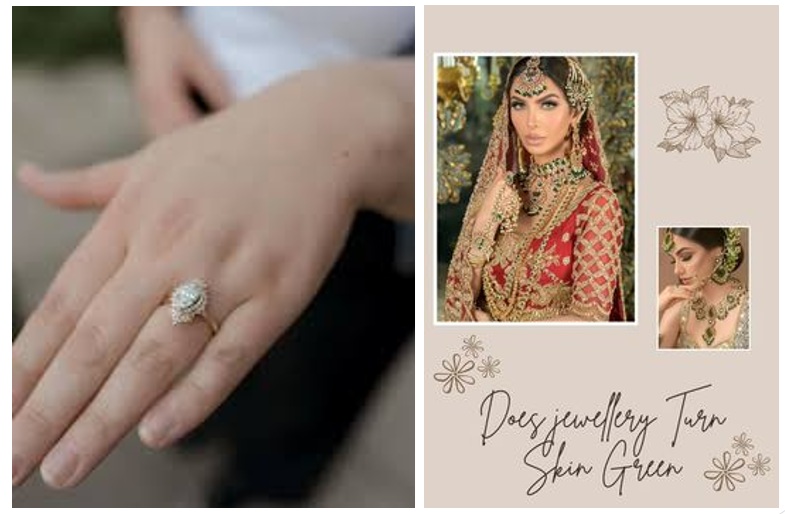
When it comes to bridal wear, choosing the right accessories becomes even more important. The best jewellery for Indian brides not only complements the outfit but should also be skin-friendly, especially since bridal jewellery is worn for extended hours during weddings and pre-wedding events. Opting for high-quality materials that minimize skin reactions ensures both elegance and comfort on your special day.
How Oxidation of jewellery Contributes to Skin Discoloration
Oxidation, which is the process of a metal reacting with oxygen and moisture, is a key factor in jewellery-induced skin discoloration.
When oxidation occurs on jewellery made from metals like copper, brass, or even silver, it creates a tarnish or patina that can rub off onto your skin.
The green marks are usually a result of copper oxide or brass oxidation mixing with the natural oils and sweat on the skin. Over time, wearing oxidized jewellery can leave permanent marks or stains on the skin if not cleaned properly.
Even jewellery with a gold-plated or silver-plated surface can oxidize, especially if the plating wears off or gets scratched, exposing the underlying metal, which then reacts with skin elements.
Therefore, regular cleaning and maintenance are essential for preventing oxidation and maintaining the jewellery’s appearance, as well as avoiding the green discoloration caused by these reactions.
Common Metals That Cause Skin to Turn Green
Several metals used in jewellery can react with the skin, leading to discoloration. These reactions are typically caused by the metal’s interaction with sweat, body oils, or chemicals. The following are some of the most common culprits when it comes to jewellery causing skin to turn green:
Copper: Why It’s Often Responsible for Green Skin Marks
Copper is one of the most common metals responsible for causing skin to turn green. Copper oxidizes when exposed to moisture, sweat, and air, forming copper oxide, which leaves a greenish stain on the skin.
This reaction is especially noticeable in bracelets, rings, and necklaces worn for long periods. While copper jewellery is affordable and stylish, its oxidation process can cause an unsightly green stain that is often difficult to remove.
The extent of discoloration varies depending on factors such as the climate, the wearer’s skin chemistry, and the jewellery’s exposure to moisture.
Copper-based alloys (like brass or bronze) can also lead to similar reactions. However, copper is more likely to cause discoloration due to its higher reactivity.
Nickel: Effects of Nickel in jewellery on Sensitive Skin
Nickel is another metal commonly used in jewellery alloys and is well-known for causing skin reactions.
For many people, nickel can cause allergic reactions, such as redness, itching, and even a rash, in addition to discoloration.
Nickel reacts with sweat, body oils, and other chemicals on the skin, often leading to a greenish stain around the area where the jewellery is worn, such as on the fingers from rings or wrists from bracelets.
Those with nickel sensitivity are more prone to these reactions, and jewellery made with high amounts of nickel can be problematic.
The green discoloration from nickel is usually accompanied by skin irritation, making it particularly uncomfortable for sensitive wearers.
Brass and Other Alloys: How These Metals Can Contribute to Skin Irritation
Brass is an alloy made primarily from copper and zinc, and like copper, it is prone to oxidation.
Brass jewellery often causes the skin to turn green, especially if the jewellery is exposed to moisture. The combination of copper and zinc creates a chemical reaction with sweat and body oils, which results in tarnish and a greenish stain on the skin.
In addition to brass, other jewellery alloys like bronze or stainless steel may also contribute to skin irritation and discoloration.
Alloys that contain copper or nickel in varying amounts are more likely to cause green marks. jewellery made with low-quality alloys or plated metals can also expose the underlying base metals, causing similar reactions.
Sterling Silver: Can It Cause Skin Discoloration?
While sterling silver is generally known for its durability and non-reactivity, it can still cause skin discoloration in some cases.
Sterling silver is an alloy composed of 92.5% silver and 7.5% other metals (usually copper). The copper in sterling silver can oxidize, leading to tarnish that may rub off onto the skin, causing a greenish stain.
However, this is typically less of an issue with higher-quality sterling silver jewellery, as it is often coated or treated to prevent tarnish.
That said, poorly maintained sterling silver jewellery may develop tarnish, especially if it is worn in areas with frequent exposure to sweat or moisture.
Silver-plated jewellery, which is a thin layer of silver applied to a base metal, is more likely to cause skin discoloration once the plating wears off and the underlying metal is exposed.
Who Is Most Likely to Experience Skin Discoloration from jewellery?
Skin discoloration from jewellery is a common issue for many individuals, but certain factors make some people more susceptible to this problem. Understanding who is most likely to experience skin discoloration can help prevent discomfort and damage to both the jewellery and the skin.
People with Sensitive Skin or Allergic Reactions to Certain Metals
Individuals with sensitive skin are more prone to developing skin discoloration when wearing certain types of jewellery.
Nickel and copper are the most common culprits for allergic reactions, as these metals can cause irritation, redness, itching, and discoloration.
Nickel sensitivity is a common issue that affects a large percentage of the population, particularly women. Nickel-containing jewellery can lead to a rash or a greenish stain when in direct contact with the skin.
Additionally, people who are allergic to certain metals might experience reactions, not only causing discoloration but also swelling and itching. It is important to avoid wearing jewellery that contains nickel, brass, or other known allergens if you have sensitive skin or allergies.
The Impact of Sweat and Body Chemistry on Skin Discoloration
The chemistry of your skin plays a significant role in whether or not your jewellery will leave a greenish stain.
Sweat, body oils, and pH levels can all interact with jewellery, particularly those made of copper, nickel, or brass, causing oxidation. For example, people with acidic skin chemistry tend to experience more severe discoloration due to the increased reaction with metals.
Excessive sweating, particularly in hot and humid environments, can accelerate the oxidation process, making the jewellery more likely to stain the skin.
Body oils also contribute to the buildup of tarnish on the jewellery, which can rub off onto the skin, especially on areas with frequent contact, such as the fingers, wrists, and neck.
Long-Term Exposure and Wearing jewellery Continuously
Long-term exposure to jewellery, especially when worn continuously without removal, increases the likelihood of skin discoloration.
Wearing jewellery during activities like exercise, swimming, or even while sleeping can expose the metal to sweat, moisture, and friction, which accelerate the oxidation process.
Constant contact between the skin and jewellery also leads to a buildup of oils and dirt, making tarnish more noticeable.
The longer the jewellery stays on, the greater the potential for discoloration. People who wear jewellery throughout the day and night, such as wedding rings, bracelets, and necklaces, are more likely to experience the green stains associated with certain metals, especially if the jewellery contains alloys that are prone to oxidation.
In South Asian countries, women often wear jewellery continuously, which has led to the development of solutions to address the common issues associated with prolonged wear.
As a result, Pakistani and Indian wedding jewellerry is specifically designed to withstand long-term use without experiencing discoloration.
The quality of materials, careful craftsmanship, and protective coatings used in these pieces ensure they remain durable and resistant to the oxidation and tarnishing that can cause skin discoloration, even with constant contact.
This makes South Asian wedding jewellery an ideal choice for those who wear their jewellery daily, ensuring it retains its beauty and integrity over time.
How to Prevent jewellery from Turning Your Skin Green
Skin discoloration from jewellery can be an annoying issue, but fortunately, there are several ways to prevent it.
By making informed choices about the jewellery you wear and following proper maintenance routines, you can minimize the chances of jewellery reacting with your skin and causing discoloration.
Choosing jewellery Made from Hypoallergenic Metals
One of the most effective ways to prevent jewellery from turning your skin green is to opt for jewellery made from hypoallergenic metals. These metals are less likely to cause skin reactions or discoloration due to their non-reactive properties.
- Titanium is a lightweight and corrosion-resistant metal that is perfect for those with sensitive skin. It does not tarnish or oxidize easily, reducing the likelihood of skin discoloration.
- Platinum is another excellent option, known for its durability and hypoallergenic properties. It is more expensive than other metals, but it is a good investment for those prone to allergic reactions.
- Sterling silver, when properly cared for, is a great alternative, as it contains less copper and is generally less likely to react with skin. However, make sure to choose nickel-free sterling silver to avoid potential irritation.
Opting for these metals reduces the chances of your skin turning green from wearing jewellery.
Applying Clear Nail Polish to the Inside of jewellery
A quick and easy DIY solution to prevent skin discoloration is applying a layer of clear nail polish to the inside of your jewellery. This creates a protective barrier between your skin and the metal, preventing direct contact with nickel or copper.
To do this:
- Ensure the inside of the jewellery is clean and dry before applying a thin layer of clear nail polish.
- Let the nail polish dry completely before wearing the jewellery. This will help create a shield against oxidation and reduce the risk of skin discoloration.
Keep in mind that this method works best for rings, bracelets, and other jewellery that comes in direct contact with the skin.
Proper Care, Cleaning, and Maintenance of jewellery
Regular cleaning and maintenance of your jewellery can go a long way in preventing skin discoloration. When jewellery becomes tarnished, it is more likely to transfer residue onto your skin, causing green marks.
- Use a soft cloth to clean jewellery regularly, and avoid abrasive materials that can scratch the surface.
- Polish jewellery made of silver, gold, or platinum to maintain its shine and prevent tarnish buildup.
- Store jewellery properly in a dry, cool place, and avoid exposing it to excessive moisture or chemicals that can accelerate tarnishing.
Proper maintenance not only helps to prevent skin discoloration but also keeps your jewellery looking beautiful for a longer period.
Tips on Removing jewellery Before Engaging in Activities That Cause Sweating
Certain activities, such as exercise, swimming, or even sleeping, can cause you to sweat or expose your jewellery to moisture. Sweat and oils on your skin can react with the metals in your jewellery, leading to discoloration.
- Remove jewellery before engaging in activities that involve heavy sweating, like working out or playing sports.
- If you’re planning to swim, especially in saltwater or chlorinated pools, remove your jewellery to prevent oxidation and tarnish.
- Sleep without wearing jewellery, particularly rings or bracelets, to avoid the accumulation of oils and sweat that can cause jewellery to tarnish.
By being mindful of when to wear and remove jewellery, you can significantly reduce the likelihood of it turning your skin green.
How to Keep Your Skin Safe from jewellery Discoloration
In conclusion, understanding why jewellery turns skin green is key to preventing it from happening.
The primary culprits are the metals used in jewellery, such as copper, nickel, and brass, which react with sweat, body oils, and environmental factors.
By choosing jewellery made from hypoallergenic metals like titanium, platinum, or nickel-free sterling silver, you can significantly reduce the chances of skin discoloration.
Additionally, simple steps like applying clear nail polish to the inside of jewellery, ensuring proper cleaning and maintenance, and removing jewellery before engaging in activities that cause sweating can go a long way in preserving both your skin and your jewellery’s appearance.
Lastly, always opt for jewellery that is designed to be gentle on your skin. With the right care and attention, you can continue to enjoy wearing your favorite pieces without the worry of skin discoloration.
Keep your jewellery clean, store it properly, and remember to choose skin-friendly options to maintain a healthy and shiny jewellery collection.