



Table of Contents
Few gemstones capture attention like opal. Instead of the single, steady colour of a sapphire or the sharp sparkle of a diamond, opal shifts and flashes as it moves in the light, showing patches of blue, green, orange and violet that seem to dance across the surface. That living, ever-changing quality is why jewellery lovers keep returning to it, and why it has become a popular choice for people who want something unusual and personal.
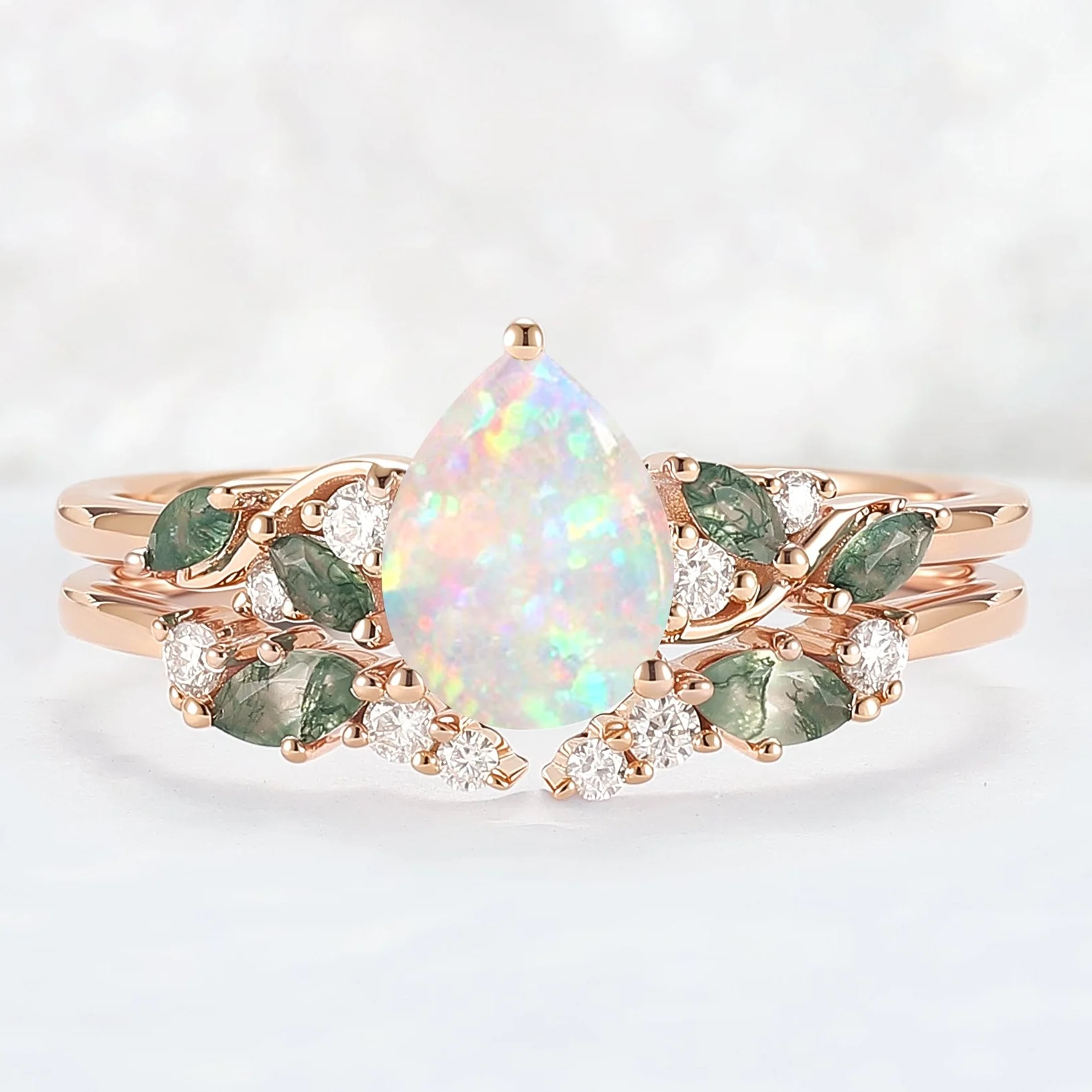
This appeal is especially strong in finger jewellery, where the stone sits in view all day. Many buyers start their search with opal rings because a single stone can carry so much colour and character on its own. Understanding what makes a good stone, how the different types compare and how to look after it will help you choose a piece you will enjoy for years.
What Makes Opal Different From Other Gemstones
Opal is formed from silica and water, and its famous shimmer comes from the way tiny silica spheres inside the stone bend and scatter light. Gemmologists call this effect play-of-colour. The size and arrangement of the spheres determine which colours appear, which is why no two stones look exactly alike.
This makes opal quite unlike crystalline gemstones. It has no regular crystal structure, and it contains a small amount of water. Those qualities give it a distinctive beauty, but they also mean it needs a little more care than harder stones such as diamond or sapphire.
The Main Types of Opal
Opal comes in several varieties, each with its own personality. Knowing the differences helps you match a stone to your taste and budget:
- Black opal: A dark body tone that makes colours appear vivid and intense, and generally among the most valued varieties.
- White or light opal: A pale, milky body with softer, pastel flashes of colour.
- Crystal opal: A transparent to translucent stone that lets light pass through, often with bright, clear colour.
- Boulder opal: Thin seams of opal attached to ironstone, giving a natural, earthy backdrop and bold patterns.
- Fire opal: Known for warm orange and red body colour, sometimes with and sometimes without play-of-colour.
- Ethiopian opal: Often very bright and colourful, though many Ethiopian stones are more sensitive to water and need extra care.
How to Judge the Quality of an Opal
Opal is judged on a handful of factors that work together. The brightness and range of the colours matter most, along with how evenly the colour is spread across the stone. A darker body tone usually makes colours look more vivid, while pale stones appear softer.
Pattern also plays a part, with some stones showing broad flashes of colour and others showing smaller, more intricate patterns. Look for a well-polished surface and a shape that suits the setting. It is wise to view the stone in different lighting, since opal can look quite different in daylight, indoor light and under a jeweller’s lamp.
Natural Stones, Doublets and Triplets
Not every stone sold as opal is a solid piece of natural material. Some are doublets, where a thin slice of opal is bonded to a backing, and others are triplets, which add a clear cap on top. These constructions can look attractive and cost less, but they are less durable than solid stones and can be damaged by water.
A reputable jeweller will say clearly whether a stone is solid, a doublet or a triplet. Lab-created opal also exists and can be a good option for people who want the look at a lower cost, as long as it is described honestly.
Choosing the Right Setting and Metal
Because opal is softer than many popular gemstones, the setting should protect it. Bezel settings, where a thin band of metal surrounds the stone, are a popular choice because they shield the edges from knocks. A lower profile also reduces the chance of snagging.
Metal can change the way the colours appear. Yellow and rose gold bring out warm tones and suit many fire opals, while white gold and silver can make blues and greens look cooler and crisper. Small diamond or gemstone accents can add sparkle without competing with the opal itself.
Everyday Wear and Care
Opal rates roughly 5.5 to 6.5 on the Mohs hardness scale, so it can scratch or chip more easily than harder stones. It also dislikes sudden temperature changes and prolonged dryness. Simple habits go a long way, such as removing the jewellery before exercise, gardening, cleaning or heavy manual work.
To clean it, use lukewarm water, a drop of mild soap and a soft cloth, then dry it gently. Avoid ultrasonic cleaners, steam and harsh chemicals. When you are not wearing it, store it on its own in a soft pouch so other jewellery cannot scratch it.
FAQs
Is opal durable enough for everyday wear?
It can be worn regularly with care, but it is softer than gemstones such as diamond or sapphire. A protective setting and sensible habits, such as removing it during rough activities, help it last.
What is the birthstone connection for opal?
Opal is the traditional birthstone for October, which makes it a popular choice for birthday gifts and meaningful presents.
How can I tell if an opal is genuine?
Buy from a trusted jeweller who can explain whether the stone is solid, a doublet, a triplet or lab-created, and ask for documentation where possible. Genuine stones show play-of-colour that shifts as the angle of the light changes.
Can an opal get wet?
Brief contact with water, such as washing your hands, is usually fine for solid stones, but long soaking is best avoided. Doublets, triplets and some Ethiopian stones are more sensitive to water.
How should I store my opal jewellery?
Store it separately in a soft pouch or lined box, away from direct heat and very dry conditions, so that it stays protected from scratches and stress.
Final Remarks
Opal offers something few other gemstones can match: a shifting display of colour that feels personal and alive. By learning the main varieties, checking the quality and construction of the stone, choosing a protective setting and caring for it sensibly, you can enjoy its beauty for many years. Whether you are marking a birthday or simply drawn to its colour, opal is a gemstone with real character.
Comments are closed.