
Radha Krishna Painting Vastu: Meaning, Placement and Direction
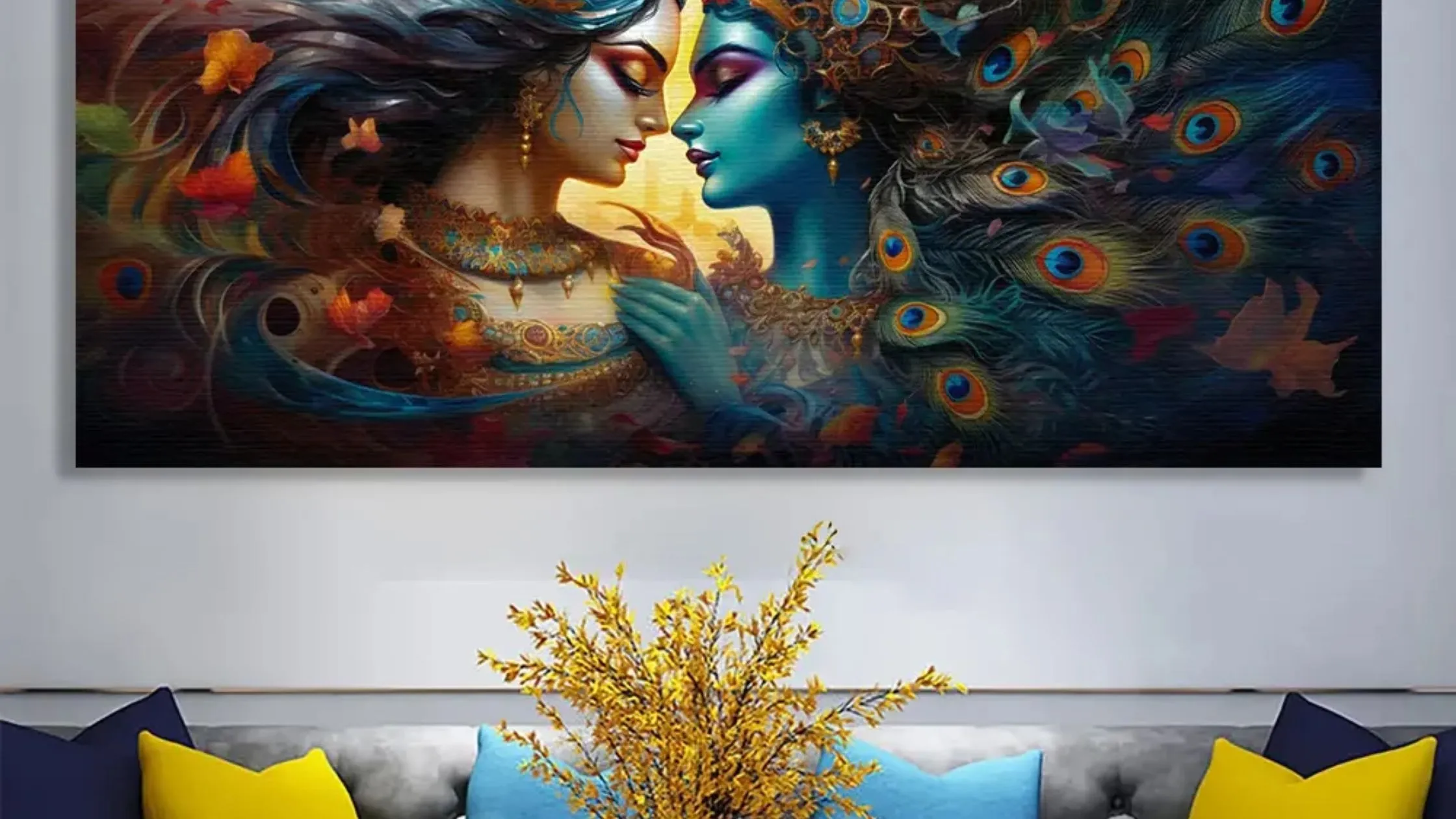
Table of Contents
A bare wall in a living room or bedroom often feels like something is missing. While a piece of artwork can bring colour to the space, devotional paintings offer something more personal. For many Indian households, an image of Radha and Krishna is a reminder of love, devotion and togetherness.
However, choosing the artwork is only part of the process. Questions about which direction it should face, whether it belongs in the bedroom and how high it should be hung are equally common. Traditional Vastu guidance offers a starting point for making these decisions, while your home’s layout and personal beliefs also deserve consideration.
What Does a Radha Krishna Painting Symbolise?
In Hindu devotional traditions, Radha and Krishna represent divine love and the relationship between the devotee and the divine. Their companionship is often depicted through scenes of Krishna playing the flute, Radha standing beside him or the pair surrounded by the natural beauty of Vrindavan.
These scenes carry different meanings for different people. A couple may see them as a reminder of affection and mutual understanding, while someone else may appreciate their spiritual significance. Motifs such as lotus flowers, peacocks and lush gardens also contribute to the peaceful character of the artwork.
Within Vastu traditions, harmonious images of the pair are associated with emotional balance and companionship. These associations are cultural and spiritual beliefs rather than scientifically established effects on relationships or household wellbeing.
Which Direction Is Best as per Vastu?
The north-east is among the most commonly recommended areas for devotional artwork. Known as Ishan in Vastu Shastra, this part of the home is traditionally associated with prayer and spiritual reflection.
The east is another frequently suggested location. Its association with sunrise makes it a meaningful choice for households that prefer to display religious artwork in a bright, welcoming space.
Some contemporary Vastu practitioners also recommend the south-west wall of a couple’s bedroom for imagery representing companionship. Recommendations vary, however, and not every family follows the same conventions.
When checking directions, distinguish between the location of the wall and the direction the artwork faces. A picture mounted on an east wall normally faces west into the room. If you follow a specific family tradition, confirm which of these two interpretations it uses before hanging the frame.
Where to Place Radha Krishna Artwork at Home?
Living room: A prominent wall near the seating area can be a suitable location, particularly if you want the artwork to become a focal point. Choose a spot that allows visitors and family members to appreciate the details without furniture blocking the view.
Bedroom: A peaceful depiction of the pair can complement a couple’s bedroom if the household is comfortable with devotional imagery in a private space. Soft colours and a gentle composition generally work better here than a visually busy mural. Families that prefer to reserve sacred images for prayer areas can choose another room instead.
Pooja room: A clean, dedicated wall near the prayer area is a natural setting for devotional art. Keep the picture above floor level and away from the direct heat of lamps and incense.
Meditation corner: A small framed image can provide a meaningful visual focus without overwhelming a quiet reading or meditation area. Leave some open wall space around it to maintain a sense of simplicity.
How to Choose the Right Artwork for Your Space
One common challenge is finding a devotional image that suits both your beliefs and the proportions of your room. A large mural may look striking on a spacious living room wall but feel crowded in a compact apartment.
If you have limited wall space, a canvas artwork may be more practical. For an expansive feature wall, a three-dimensional relief mural can introduce depth and texture. The range of radha krishna painting options from Artociti includes Kerala mural-style canvases and relief artworks, offering different formats for these two decorating needs.
Pay attention to the composition as well. If companionship is the meaning you wish to emphasise, choose an image that depicts the pair together in a peaceful setting. Consider whether the background colours complement your curtains, furniture and existing wall finishes.
Exploring Traditional Indian Art Styles
Indian devotional art has a rich visual language, and different regional styles can offer distinct ways to express the same spiritual themes.
For example, a pichwai painting can be a suitable alternative or companion piece if you want to introduce traditional Krishna imagery into a prayer corner or living room. Originating in the devotional traditions of Nathdwara, Rajasthan, this art form is closely associated with Shrinathji and frequently features cows, lotus flowers and seasonal festivities.
A detailed composition works well against a plain wall, while a simpler artwork may be easier to combine with patterned furnishings. If you display several devotional pieces together, choose complementary colours and leave enough space between frames so that each image remains visible.
Common Placement Mistakes to Avoid
Hanging artwork too low: Sacred imagery is generally displayed respectfully above floor level. Eye-level placement also makes it easier to appreciate the artwork.
Choosing a cluttered location: A wall crowded with shelves, cables or unrelated decorative items can distract from the painting. Give the piece sufficient breathing room.
Ignoring sunlight and moisture: Direct sunlight may fade colours over time, while damp walls can damage frames and canvas. Choose a dry location with indirect lighting.
Overlooking household customs: Some families avoid placing devotional art near bathrooms or in bedrooms. Discuss these preferences before deciding on a permanent location.
Expecting artwork to solve relationship problems: A meaningful image can serve as a personal reminder of shared values, but communication and mutual respect are more important for maintaining healthy relationships.
Conclusion
Choosing a place for devotional artwork involves more than finding an empty wall. The meaning of the image, traditional directional preferences, room layout and your family’s comfort all play a role. Whether you prefer a modest canvas in a prayer corner or a detailed mural in the living room, select a piece that feels personally meaningful and fits the space. Vastu can guide your decision without taking away the freedom to create a home that reflects your own values.
FAQ
Yes, many households choose peaceful imagery of the pair for a couple's bedroom. Follow your family's religious customs when deciding whether this is appropriate.
No. Although it is commonly preferred in Vastu guidance, traditions differ. The east is also frequently suggested for devotional artwork.
Yes, provided the wall is clean, the frame is securely mounted and the image has adequate clearance above the furniture.