



Table of Contents
Not every engagement ring is built for the life you actually live. Some settings look stunning in the store and then get dinged, snagged, or chipped within a year of daily wear. If you’re someone who cooks, gardens, types all day, or just can’t stop touching things, the setting matters more than you’d think.
Why Setting Matters More Than Stone Choice
People obsess over diamond cut and carat weight, and sure, those matter. But the setting is what actually determines whether your ring survives the school run, gym sessions, and doing dishes with your gloves still in the drawer somewhere. A gorgeous stone in a fragile setting is a ring you’ll be babying for the rest of your life, checking your finger every time you brush past a doorframe.
The prongs, or lack of them, are usually the weak point. Traditional four and six-prong settings lift the stone up and expose it. That’s great for light bouncing through the diamond, not so great when you catch it on a wool sweater or a car door.
The Case for Low-Profile Settings
If you want a ring you don’t have to think about, look for anything that sits close to the finger. Flush settings, low-set halos, and channel settings all reduce the amount of stone sticking out and catching on things. Your jeweller can usually tell you the millimetre height of the setting, and generally anything under 4mm from the finger is going to feel noticeably more secure day to day.
The Bezel Setting Advantage
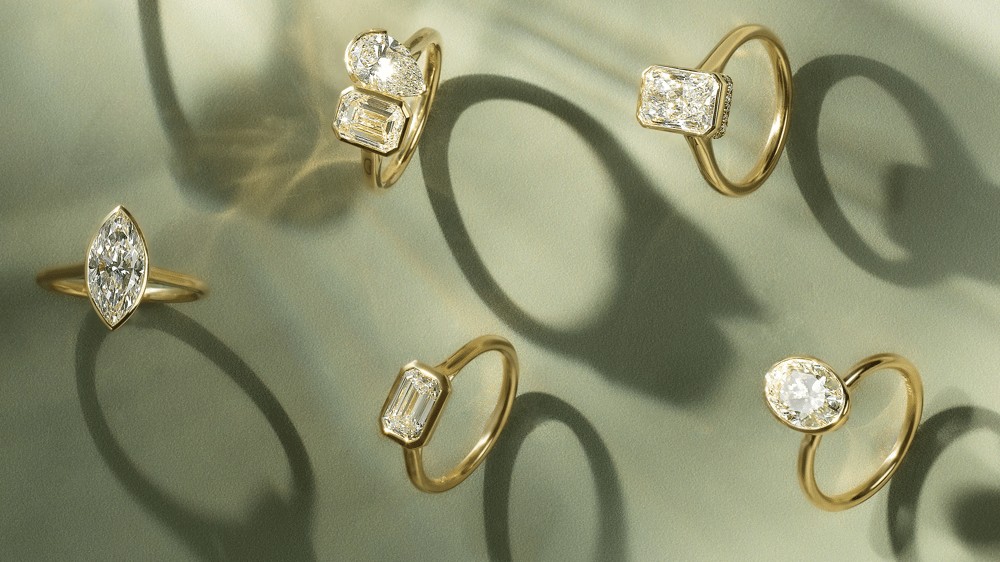
This is where bezel settings earn their reputation. Instead of thin metal claws, a bezel wraps a continuous rim of metal around the entire edge of the stone, holding it in place from all sides rather than a handful of contact points. There’s nothing sticking up to snag on a scarf or knock against a countertop. If you’ve ever had a prong catch on something and felt your stomach drop, you’ll understand why so many people switch. A well-made bezel ring by Cullen Jewellery Canada shows this off nicely, with the rim doing double duty as both protection and a clean, modern line around the stone.
Bezels also tend to age better. Prongs can wear thin over years of contact and need re-tipping eventually, whereas a bezel spreads pressure more evenly around the stone. It’s not indestructible, nothing is, but it’s a genuine step up in durability if your hands are busy most of the day.
What to Ask Your Jeweller
Before you settle on anything, ask a few practical questions. What metal is the band, and how does it hold up to scratching? Is the setting easy to resize later, since some low-profile styles are trickier to adjust? And how does the stone sit relative to the band, since anything flush or bezel-set will resist chips far better than something raised.
The Trade-Off Worth Knowing
The one thing to be upfront about: bezel and low-profile settings do let in slightly less light around the edges of the stone compared to an open prong setting, so the diamond can look marginally smaller for its actual carat weight. Most people find that trade entirely worth it once they’ve lived with a ring for a few months and realized they haven’t caught it on anything once. A ring you can actually forget you’re wearing, in the best way, tends to win out over one that photographs perfectly but needs constant checking.