



Table of Contents
Your factory decides how far your brand goes. Partner is right, you get clean stitching, fair price, and samples according to your tech pack. Get it wrong and you’re stuck for the next six months seeking refunds and apologizing to customers for the unfilled orders.
I have found clothing from factories in China for years. I have attended sample meetings than I can remember and I have left more suppliers than I have stayed with. So this guide does not include details. You get ten manufacturers worth a real conversation in 2026, and the exact checks I run before I wire a single dollar. Some suit a startup testing its first drop. Others handle six-figure bulk without blinking.
Why China still wins custom orders
Vietnam, Bangladesh, Turkey, Portugal — they all want your business now, and some of them are genuinely good. Yet China keeps taking custom orders, and the reasons are hard to argue with.
Everything sits close together. Guangzhou packs thousands of fabric and trim suppliers within a short drive of the sewing floor, so your factory finds the right zipper or knit in a day instead of waiting three weeks for it to arrive. Decoration stays in the same building too. Screen print, embroidery, DTG, sublimation, puff, rhinestone — you rarely need a second vendor for any of it.
Then there is the flexibility. Plenty of Chinese custom houses now start you at 20 to 50 pieces per design, which means you can test an idea before betting real money on it. They’re quick too – 5-10 days for a sample, 3-5 weeks for a full run.
The bad news is that the quality can vary significantly from one factory to another. The ten below fall on the right of that line.
What actually made the cut
I ignored the marketing pages. What I care about is the stuff that protects your money.
A sensible MOQ for your stage matters more than a big capacity number. So does a real specialty, because a factory that swears it makes everything usually masters nothing. I want decoration handled in-house so prints stay consistent, sampling that comes back fast and honest, the right certifications when your market demands them, and communication I can actually rely on when something breaks at 2 a.m. my time. Every name here earns its spot on at least three of those. I also mixed price points and product types on purpose, so you match a factory to your brand instead of settling for a “best” that fits nobody.
1. Appareify
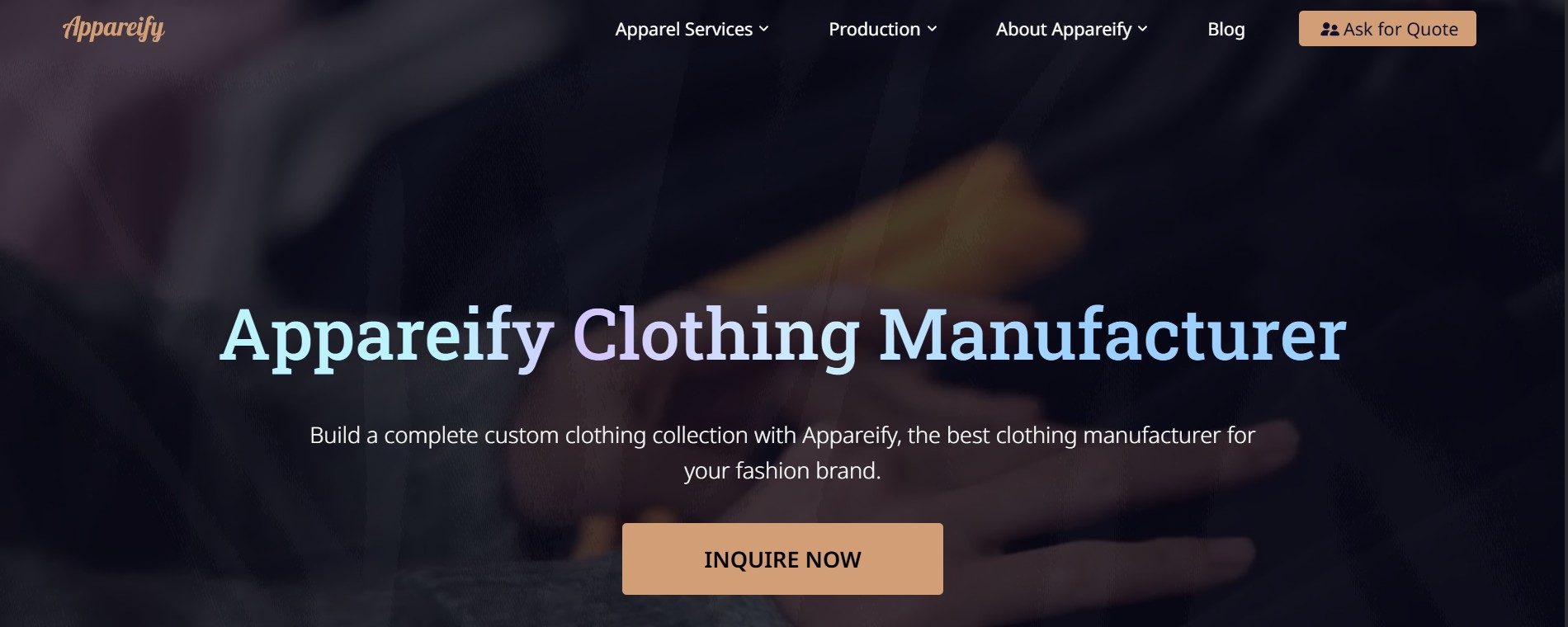
Appareify runs big. The company ships a reported 400,000 pieces a month, so if your brand has moved past testing and your order sizes keep climbing, put them near the top of your call list.
Their range is wide — swimwear, jackets, leggings, everyday knits — and they lean into eco-friendly fabric with full private-label support, so your tags and packaging carry your name rather than theirs. Most categories start around 80 to 100 pieces per design. This is a partner for the brand that needs consistency at scale far more than it needs a hand-holding startup minimum.
2. Customlin
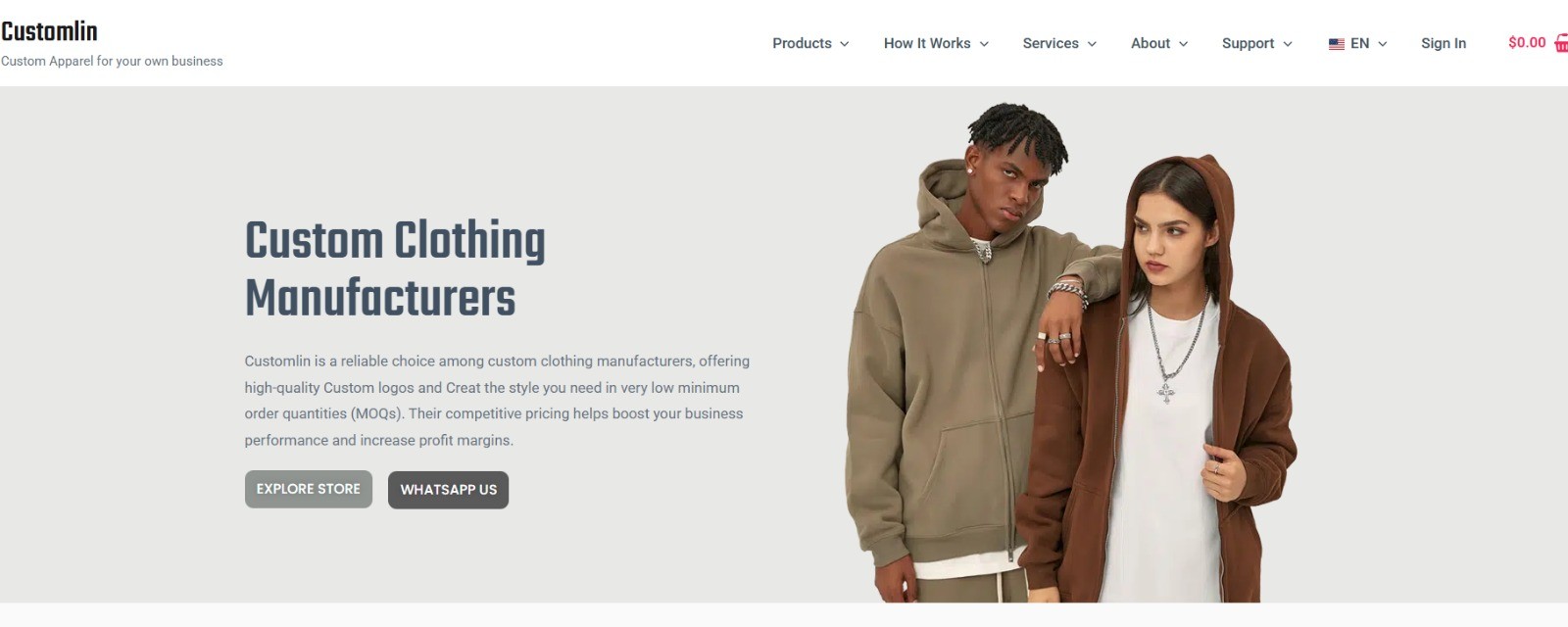
When a new founder asks me where to start, Customlin is usually my first answer. They take custom logo orders from just 20 pieces and general orders from 50, so you can prove a design works before gambling your whole budget on stock that might sit in a warehouse.
They sit in Guangzhou, right on top of the world’s largest fabric and trim market, and it shows in a fabric range north of 2,000 options. Fifty-plus workers run the floor, each with a decade or more behind them, and monthly capacity clears 100,000 pieces. That combination is rare: you keep tiny minimums today but never hit a ceiling once things take off.
What really sold me is the control. Every decoration method you need lives under one roof — screen print, embroidery, heat transfer, DTG, rhinestone. Take their oversized t-shirts as an example. When you are looking for clothes that fit well the fabric and the way the design is placed on the fabric are really important. If the same people who make the clothes also print the designs then the quality is more consistent. The people who make these clothes check them three times to make sure they are good. They check the fabric they check the clothes while they are being made and they check them again before they are sent out. The clothes also have certificates like OEKO-TEX and SGS. If you want to buy an amount of clothes but still have control, over how they are made and have the option to buy more later then these clothes are a good choice.
3. Hongyu Apparel
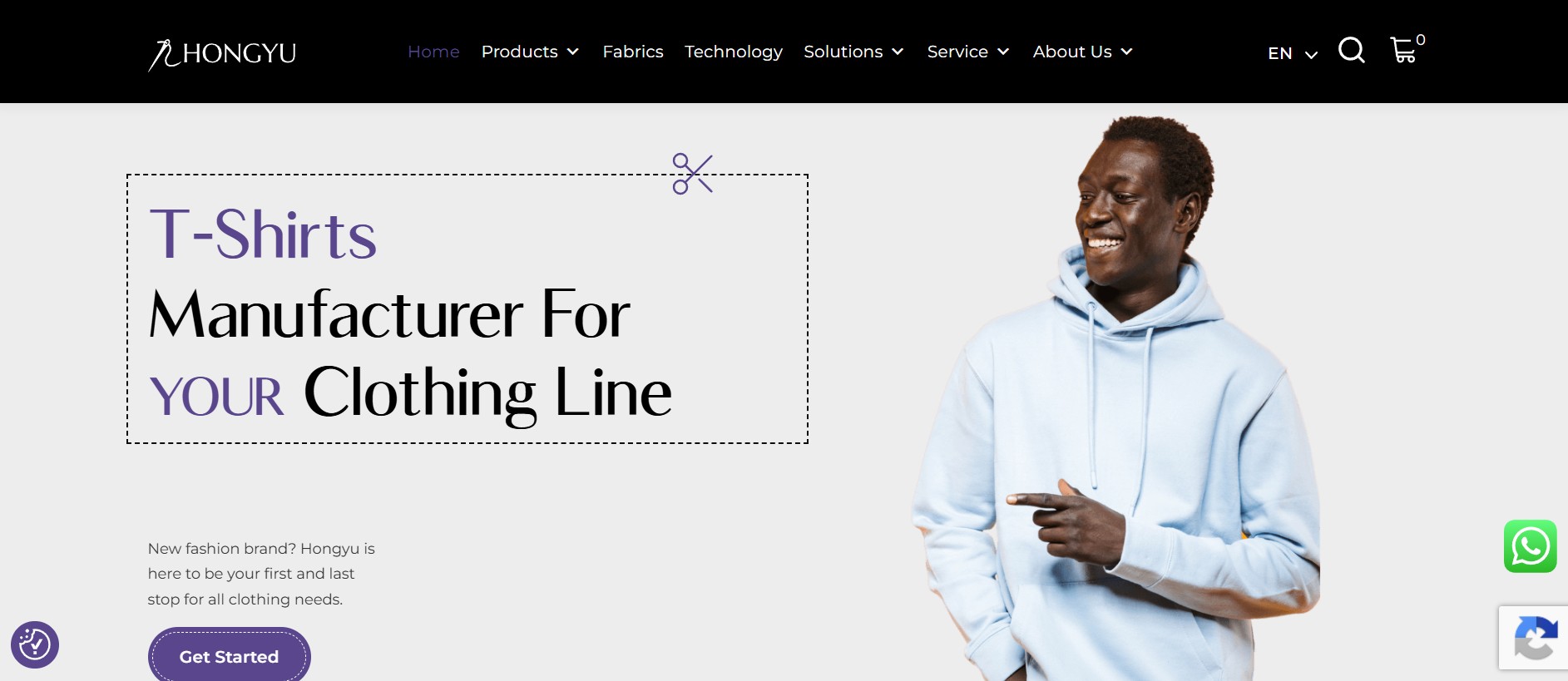
Hongyu works out of Humen in Dongguan, which is basically the beating heart of Chinese streetwear. If your brand lives on relaxed silhouettes, rib-neck tees, and quick trend turns, they run at your speed.
Sampling is their standout. Prototypes come back in five to seven days, and 3D prototyping lets you lock a fit before anyone cuts fabric, which quietly saves you an entire sample round and a week of waiting. Minimums start around 50 to 100 pieces per design and color. They make dresses and men’s shirts too, but streetwear is clearly where their instincts are sharpest.
4. Ninghow Apparel
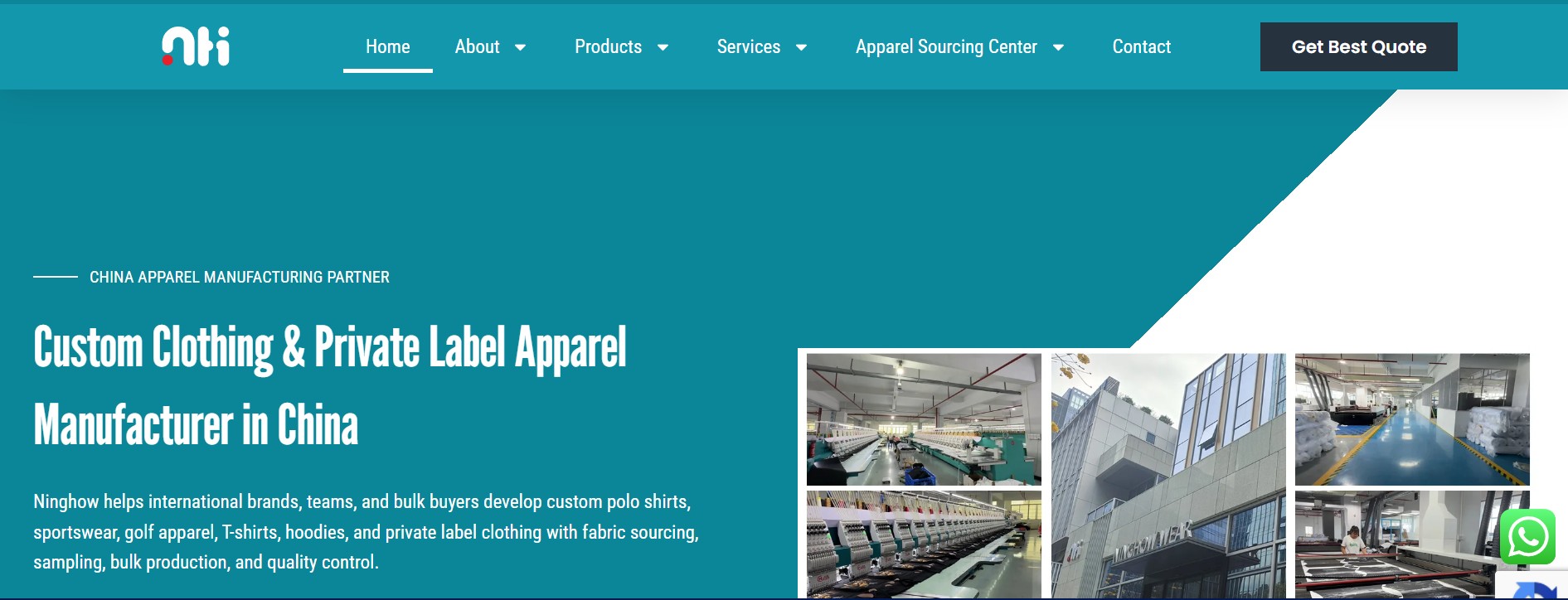
Ninghow, a Fujian-based brand, established its reputation in the custom polos, hoodies and sportswear industry. It’s an easy place to be if you’re selling to a team, club, or corporate customer who needs clean branding on reliable staples.
The private-label support is real here. They will source fabric for you and build the tech pack from scratch if your designs are not production-ready yet, and minimums start around 50 pieces, which keeps smaller institutional orders viable. They are not chasing trends. They are getting the same logo and the same stitch right, order after order, which is exactly what a uniform buyer needs.
5. SECXON
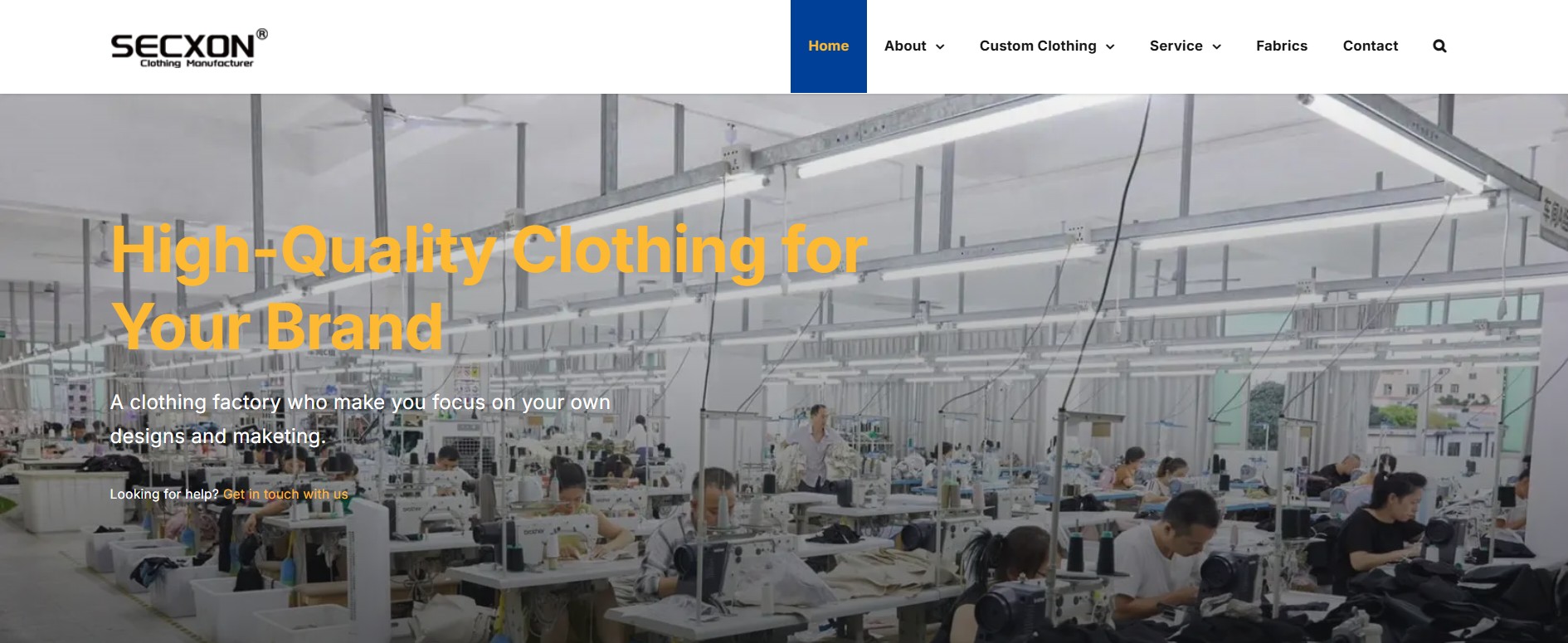
SECXON in Guangzhou is the one to call when your customer judges a tee the moment they pick it up. They specialize in the heavyweight cotton that premium streetwear demands.
Think 260 to 320gsm, with color that stays saturated after a real wash cycle. Minimums sit around 100 pieces per design and color. Nobody would call this the cheap option, and it is not trying to be. You pay for the boxy structure, the thick hand-feel, and prints that survive their tenth wash instead of cracking on the third. If weight and durability define your product and your price point can carry it, the math works.
6. Yotex Apparel
Activewear and swimwear punish a general factory, so a specialist earns its keep fast. Yotex, in Xiamen, focuses on exactly this technical corner — anything that needs stretch, sublimation, and fabric that performs.
Their all-over sublimation is the draw, because leggings and swim pieces need graphics that wrap the fabric cleanly rather than a print slapped on the front. Minimums land around 100 to 200 pieces per design, and they will help refine your patterns for four-way stretch if the fit is fighting you. OEM service comes standard.
7. Diznew
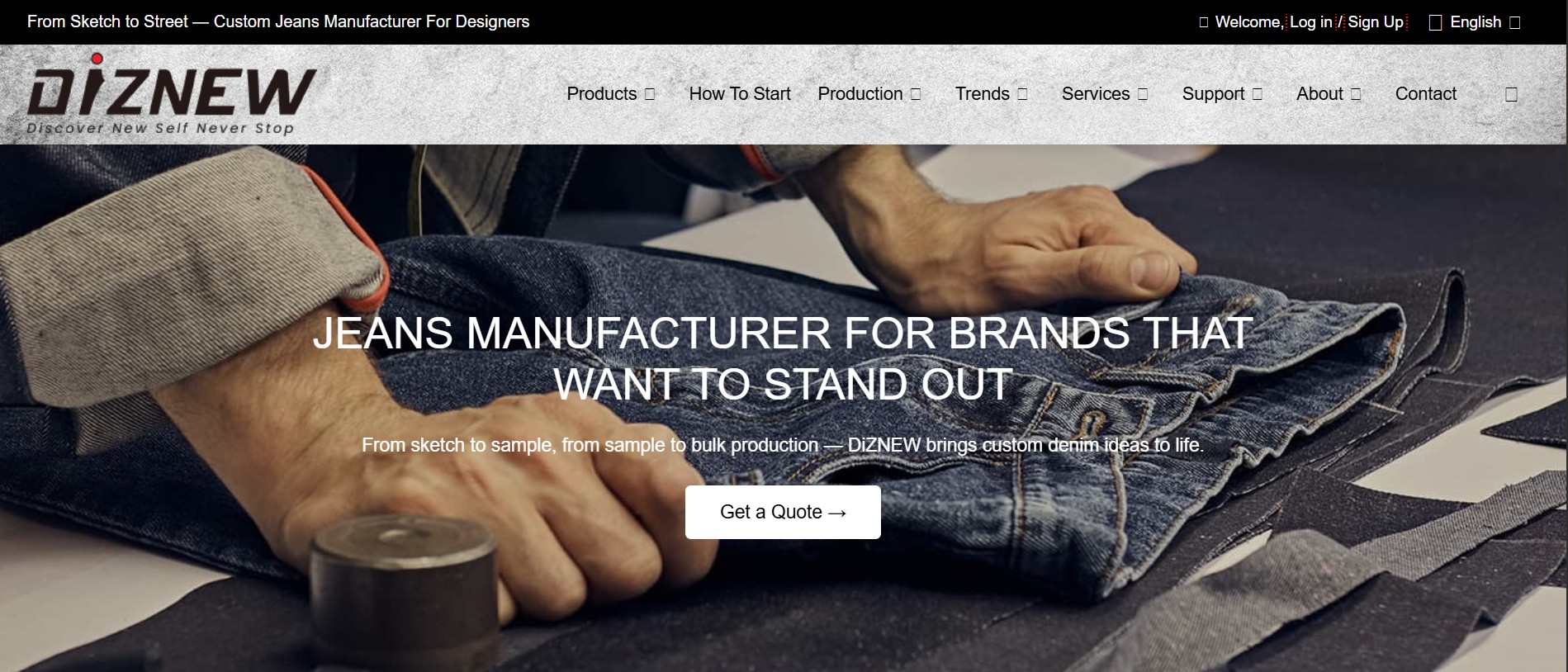
Denim is its own craft, and Diznew in Shandong built its entire operation around it. Washes, distressing, hardware, heavy-fabric construction — none of that happens well at a factory that mostly runs tees.
They are ISO9001 certified and crank out almost 100,000 jeans a month, therefore they can handle a boutique and heavy volume. When it comes to jackets, if you have a couple of denim jackets or a denim jacket of some sort that’s the cornerstone of your wardrobe, then this particular house is a better choice than anything else out there.
8. Arlisman
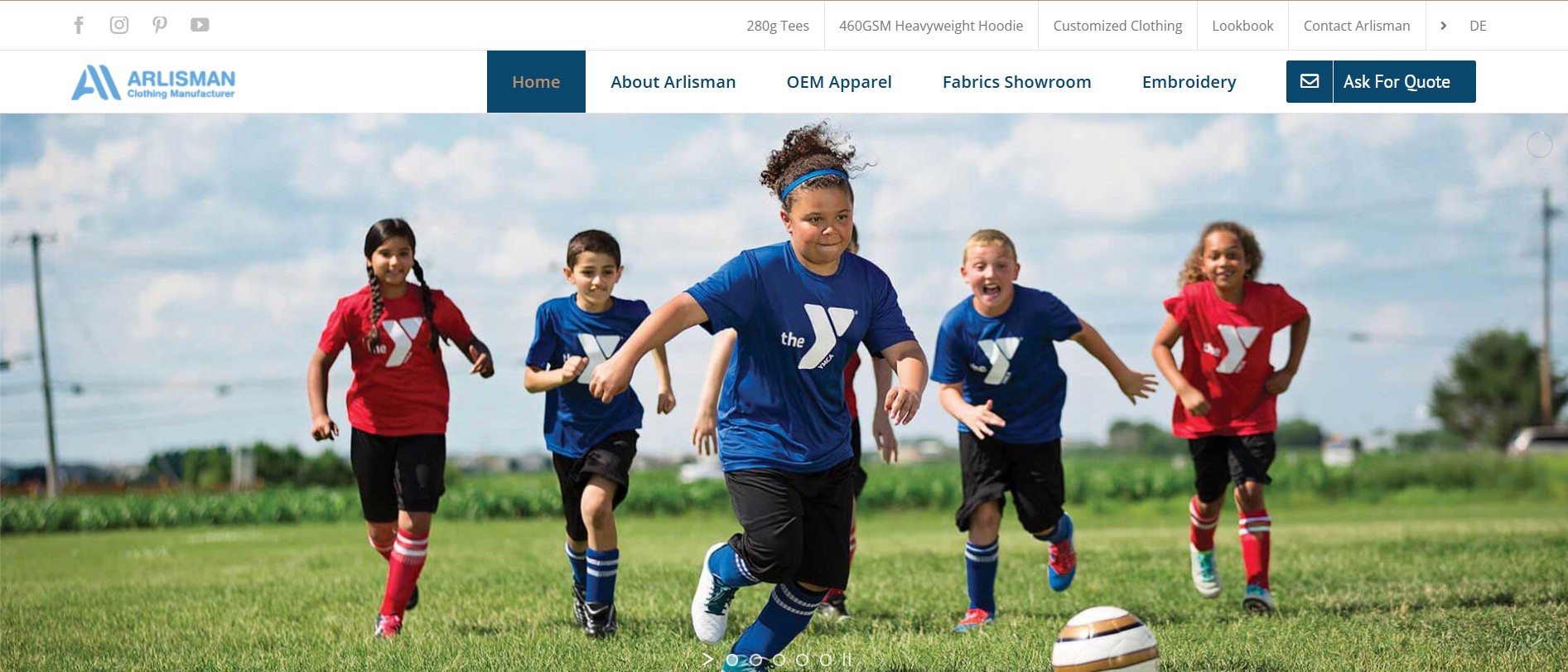
Arlisman, over in Zhongshan, serves the quiet-luxury crowd. Fine combed cotton, double-stitched seams, restrained design — that is their lane.
The minimum quantity is approximately 100 pieces per design & color. What people underestimate is that a plain t-shirt is more difficult to pull off than a loud graphic t-shirt, there’s no place to hide. Every seam shows, every neckline finish gets noticed. Arlisman delivers that precision consistently, which is why it suits brands where “minimal” is a premium statement, not a budget shortcut.
9. Mingxing Clothing
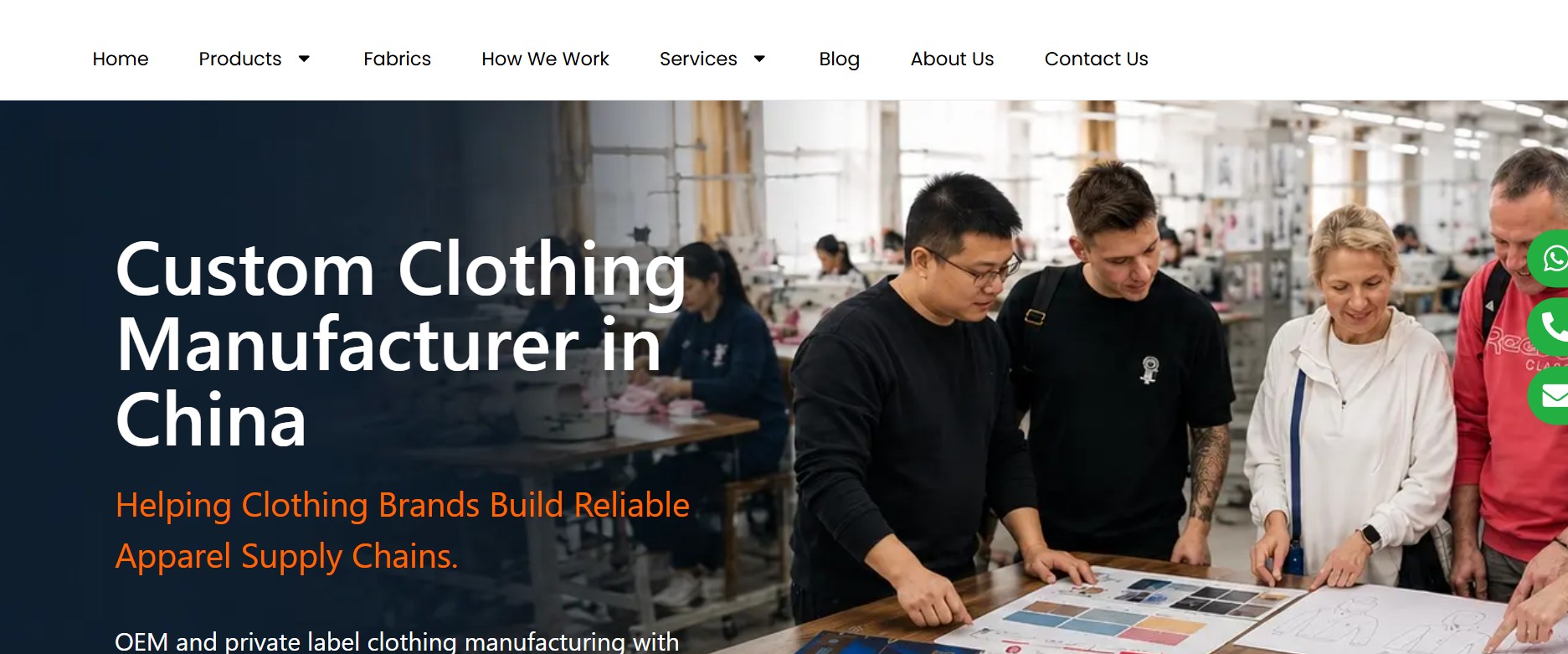
Mingxing in Dongguan pitches itself as a one-stop shop for oversized apparel, handling design, soft-touch fabric, printing, and embroidery in-house. If you would rather manage a single partner than juggle three, that is the appeal.
Minimums start around 100 pieces per design and color, and keeping printing and embroidery on their own floor protects consistency across a mixed order. It is a good fit for a founder who wants one point of contact from the first sketch to the final box on the truck.
10. Apparel Win
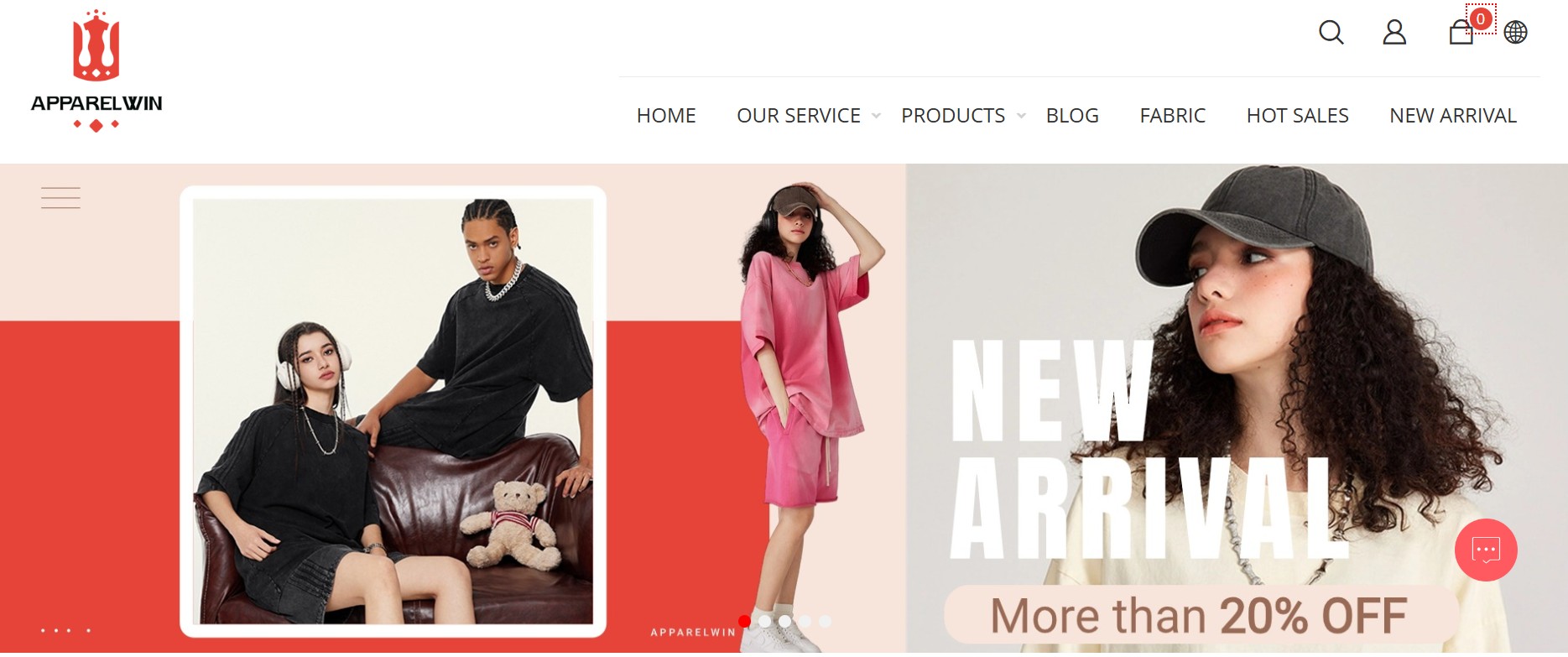
Apparel Win in Guangzhou rounds things out with broad coverage — dresses, sportswear, t-shirts, the lot. When your catalog spreads across categories and you want a flexible generalist with genuine OEM support, they are worth a look.
Minimums sit around 100 pieces per design, and they throw in pattern making and packaging, which helps while you are still building out your production process. They are a utility player rather than a narrow specialist, and for a young, varied catalog, that range is genuinely useful.
The list at a glance
| Manufacturer | Location | Starting MOQ | Strongest at |
| Appareify | Shanghai / Guangzhou | ~80–100 pcs | Scaling volume brands |
| Customlin | Guangzhou | 20–50 pcs | Low-MOQ startups, streetwear |
| Hongyu Apparel | Dongguan (Humen) | 50–100 pcs | Fast streetwear sampling |
| Ninghow Apparel | Fujian | ~50 pcs | Polos, hoodies, team sportswear |
| SECXON | Guangzhou | ~100 pcs | Heavyweight streetwear |
| Yotex Apparel | Xiamen | 100–200 pcs | Activewear, swimwear |
| Diznew | Shandong | Flexible | Denim and jeans |
| Arlisman | Zhongshan | ~100 pcs | Premium minimalist basics |
| Mingxing Clothing | Dongguan | ~100 pcs | All-in-one oversized apparel |
| Apparel Win | Guangzhou | ~100 pcs | Mixed women’s and casual lines |
Picking the one that fits you
The best factory here is not the biggest one. It is the one that matches where your brand actually stands today.
Look at your MOQ reality first. Still testing designs? A factory that opens at 20 to 50 pieces guards your cash, and you have no business letting a 500-piece minimum saddle you with stock you cannot shift. Once your sell-through steadies, that is when you graduate to the high-volume names.
Then line up the specialty with your product. A denim brand belongs with a denim house. Heavyweight streetwear needs someone who stocks 280gsm every day, not a factory that orders it in special and adds a markup. A specialist saves you grief even when it charges a little more per piece.
Whatever you do, order a sample before you commit. Pay for a proper pre-production piece, hold it, wash it three times, and check the print after. That one garment tells you more than any glossy sales page ever will. While you are at it, send a detailed question during the quote stage and watch how they reply. Fast, clear, honest answers now usually mean fewer disasters later. Slow or vague ones are the loudest warning you will get. And if you sell to kids, into the EU, or through retail, ask for the OEKO-TEX, SGS, or ISO paperwork and actually verify it, because a factory that hands over documents quickly is one that has passed real audits.
Where new brands lose money
A few traps catch people over and over. Trying to find the lowest price usually causes problems because the things a cheap factory saves on are the ones you don’t notice until the packages arrive Skipping the sample to save two weeks can cost you the whole run when the fit comes back wrong. Ordering huge volumes on a first go, before you know the design sells, locks up cash you need elsewhere. And brushing off slow replies during the quote stage hands you a partner who vanishes the second a problem appears.
Slow down at the start. The month you spend vetting a factory saves you the quarter you would otherwise burn fixing a bad order.
FAQs
What MOQ is realistic for a brand-new label?
Look for a factory that opens between 20 and 100 pieces per design while you are testing. Customlin, Hongyu, and Ninghow all sit in that band, so you can check demand before scaling your orders.
How long does a custom order actually take?
Plan on five to ten days for a sample and roughly three to five weeks for bulk production once you approve it, then add shipping on top depending on your method and destination.
How do I avoid getting burned on quality?
Pay for a pre-production sample, wash and stress-test it, confirm the certifications, and stick with a factory that runs multi-stage checks. A three-step inspection covering fabric, mid-production, and final output catches most defects before they ever ship.
Can I get my own labels and packaging?
Yes. Any genuine private-label manufacturer, including most on this list, will print your neck labels, hang tags, and custom packaging so the finished product carries your brand from the inside out.